Duke University Marine Lab Summer Course Offerings


Duke University Marine Lab Summer Courses
May 15- June 16, 2017
Summer Term I
The biology of marine systems, emphasizing field experiences and hands-on activities. Basic physical characteristics of the world’s oceans and the basic processes of life, diversity of life in marine systems, survey of marine habitats, and discussion of human impacts on marine systems.4 credit course.

Sensory Physiology of Marine Animals 
Sensory physiological principles with emphasis on visual and chemical cues. Laboratories will use behavior to measure physiological processes.4 credit course..

Marine Invertebrate Zoology
Structure, function, and development of invertebrates collected from estuarine and marine habitats. In this course, we will explore biodiversity through explorations of marine invertebrate life. 4 credit course.

Molecular Biology
Introduces major concepts in biology through the lens of molecular biology. Molecular mechanisms that comprise the Central Dogma and variants. DNA structure and function, replication, transcription, and translation. Protein synthesis, folding, structure and function. 4 credit course.

Physics
First part of a two-semester, calculus-based, physics survey course for students planning study in medicine or the life sciences. Topics: kinematics, dynamics, systems of particles, conservation laws, statics, gravitation, fluids, oscillations, mechanical waves, sound, thermal physics, laws of thermodynamics.4 credit course.

Stats 101 Data Analysis and Statistical Inference 
Introduction to statistics as a science of understanding and analyzing data. Themes include data collection, exploratory analysis, inference, and modeling. Focus on principles underlying quantitative research in social sciences, humanities, and public policy. 4 credit course.


Tuition & Fees are available on our website.
Tuition scholarship requests are available through 1 April. Check the Summer Scholarship section of our website for additional details.

Ready to Sign up?
Visit the enrollment section of our website.


Courses are open to undergraduate and graduate students from any college institution.
Summer Term II
 July 10- August 11, 2017
We are excited to add the expertise of author Paul Greenberg to our summer Conservation Biology & Policy course. Greenberg will co-teach alongside Duke faculty Doug Nowacek and Grant Murray. Course Description: Introduction to the key concepts of ecology and policy relevant to conservation issues at the population to ecosystems level. Focus on the origin and maintenance of biodiversity and conservation applications from both the biology and policy perspectives (for example, endangered species, aquaculture, captive breeding, reserve design, habitat fragmentation, ecosystem restoration/rehabilitation). 3 credit course.

Drones in Marine Biology, Ecology and Conservation
A full overview of past and emerging applications for ecology and biology of marine species and coastal habitats with in-depth discussion on future of drone applications in coastal biological and ecological research. Comprehensive exploration of current drone technologies, including detection limits of target species, payload selection, operational procedures aeronautical concepts, rules and regulations, safety, mission planning, aircraft design, maintenance, data collection, management and analysis. Biological and technical lab components tailored to student interests: Active participation in megafaunal or environmental research and data analysis.  Building, operating and maintaining aircraft, programming for manual and autonomous flight.3 credit course.


Students may register for two courses during Summer Term II. Pair one course from above with one course below.


Marine Ecology 
Factors that influence the distribution, abundance, and diversity of marine organisms. Course structure integrates lectures, field excursions, lab exercises and an independent project. Lecture topics include physical characteristics of marine systems, adaptation to environment, species interactions, biogeography, larval recruitment, and biodiversity and conservation of communities found in rocky shores, tidal flats, beaches, marshes, mangrove, coral reefs, and subtidal areas.4 credit course.

Marine Mammals  
The biology of cetaceans, pinnipeds, sirenians, sea otters, and sea birds. Topics covered include the diversity, evolution, ecology, and behavior of marine mammals and their interactions with humans. Detailed consideration given to the adaptations that allow these mammals to live in the sea. Evaluation of the scientific, ethical, and aesthetic factors influencing societal attitudes toward these animals and of their conservation management in light of domestic legislation and international treaties. Laboratory and field exercises consider social organization, behavior, ecology, communication, and anatomy of local bottlenose dolphins.Detailed consideration is given to adaptation, ecology and conservation. Laboratory and field exercises address behavior, ecology, and communication of local populations of marine mammal and seabirds. 4 credit course

Biology and Conservation of Sea Turtles
Biology including the anatomy, physiology, behavior, life histories, and population dynamics of sea turtles linked to conservation issues and management. Focus on threatened and endangered sea turtle species, with special attention to science and policy issues in United States waters.   4 credit course.


Tuition & Fees are available on our website.
Tuition scholarship requests are available through 1 April. Check the Summer Scholarship section of our website for additional details.

Ready to Sign up?
Visit the enrollment section of our website.


Courses are open to undergraduate and
graduate students from any college institution.

A TOWN HALL WITH GREG FISHEL LIFE ON LAND: TODAY AND IN THE FUTURE

  • Thursday, December 01, 2016
  • 7:00pm – 8:30pm
  • WRAL 3D Theater
    Downtown Raleigh
    11 West Jones Street
    Raleigh, NC 27601 United States
fishel

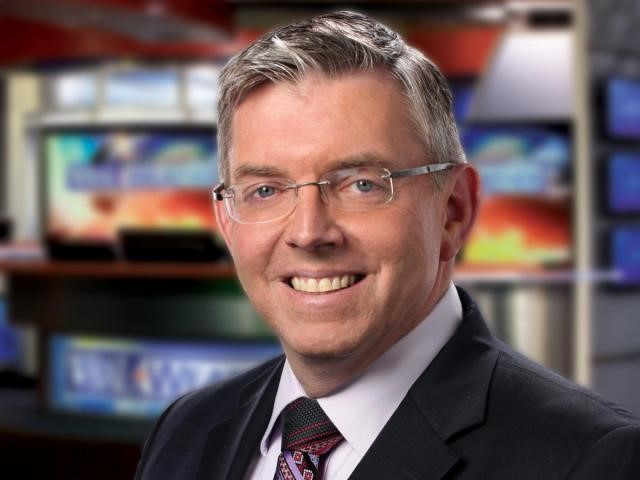
Our survival is inextricably entwined with the survival of all species that call our planet home, yet our current destructive trajectory is resulting in mass extinction of species and irreparable damage to our world. How do we change our current course and better conserve, or even serve, the natural world? Join WRAL chief meteorologist Greg Fishel for a new Town Hall discussion — “Life on Land: Today and in the Future” — at the Museum, Thursday, December 1, 7–8:30 p.m. Fishel will be joined by Paula J. Ehrlich, President and CEO of the E.O. Wilson Biodiversity Foundation, and Mark Anderson, Director of Conservation Science for The Nature Conservancy’s Eastern U.S. Region.

This Town Hall addresses the United Nations’ Sustainable Development Goal #15: Life on Land, designed to protect, restore and promote sustainable use of terrestrial ecosystems, sustainably manage forests, combat desertification, and halt and reverse land degradation and halt biodiversity loss.

ABOUT OUR SPEAKERS

E.O. Wilson has created the groundwork for one of the grandest conservation efforts of our time, the Half-Earth Project. Paula Ehrlich, PhD, will reveal how the Project is working to provide the urgently needed research, leadership and engagement necessary to conserve half the planet for the rest of life. In her role at the E.O. Wilson Biodiversity Foundation in Durham, Ehrlich champions biodiversity research to inform conservation efforts, and uses pioneering educational tools and creative media to engage people in the importance of our biological heritage and to encourage a robust response to the extinction crisis. She has more than 25 years of strategic scientific management and research expertise, and diverse academic, non-profit and corporate leadership experience.

As Director of Conservation Science for The Nature Conservancy’s Eastern U.S. Region, Mark Anderson, PhD, provides ecological analysis and develops landscape-scale assessment tools for conservation efforts across eight ecoregions. He has worked as an ecologist for more than 20 years and is co-author of the National Vegetation Classification as well as numerous journal articles on biodiversity conservation.


This program is part of a series at the Museum ― The Nature of Science: A Town Hall with Greg Fishel ― inspired by Albert Einstein’s view that “To raise new questions, new possibilities, to regard old problems from a new angle, requires creative imagination and marks real advance in science.” The series is designed to provide in-depth discussions with leaders from around the globe, as they explore the major scientific and environmental issues of our time. Comments and questions from the audience are encouraged.

Doors to the WRAL 3D Theater open at 6:30 p.m. All guests are invited to attend a coffee and dessert reception following the program from 8:30 to 9 pm in the Museum’s Natural Treasures Gallery.

This program is made possible by the Friends of the NC Museum of Natural Sciences and Capitol Broadcasting Company.

DETAILS

VENUE

WRAL 3D Theater
Downtown Raleigh
11 West Jones Street
Raleigh, NC 27601 United States
Phone:
919.707.9800